Intercropping crops with trees in the Sahel: The example of Faidherbia
Let's take a look at one example to understand the advantages of integrating trees with annual crops and livestock. Faidherbia albida (also known as Acacia albida) is a well-known tree in the Sahel. Farmers often call it a "miracle tree" because they recognize its ability to boost yields. Scientific research confirms its positive effects on crop productivity: millet grown under the canopy of Faidherbia albida produces significantly higher grain yields compared to millet planted more than 17 meters from the trunk (Roupsard et al., 2020). Near Faidherbia, yields can be up to three times higher, emphasizing the tree's remarkable contribution to agricultural productivity.
Why does Faidherbia increase yields?
Let's find out why: Faidherbia trees create areas with increased soil fertility under their canopy (Sidy Sow et al. 2024). These 'islands of fertility' emerge for a variety of reasons. Faidherbia trees form a symbiotic relationship with beneficial soil organisms that fix nitrogen in small pockets around their roots. Nitrogen is an essential nutrient for crop growth. In addition, the pods produced by the trees are a nutritious source of fodder that can be fed to livestock during the dry season, when food is scarce. The shade provided by the tree canopy also offers livestock a place to rest during the dry and hot season. By resting under the trees, the animals leave some of their manure under the canopy of the Faidherbia trees, which naturally fertilizes the soil and promotes agricultural production.
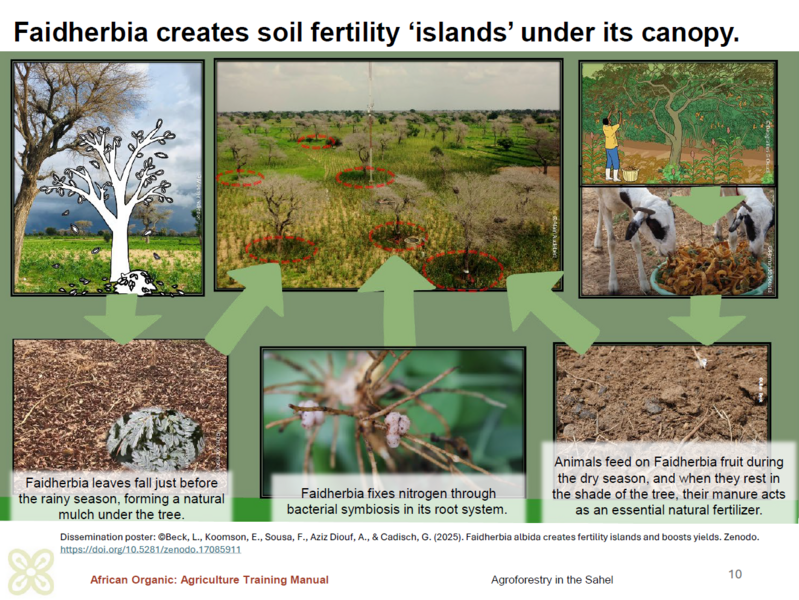
When Faidherbia is present in the field, the soil contains much more nutrients and organic matter (+62% in the top 10 cm of soil). This helps millet grow better and produce higher yields (Siegwart et al. 2022) . But that's not all. Faidherbia is truly an exceptional tree: it keeps its leaves during the dry season but loses them during the rainy season, when crops are growing. This means it does not compete with them for water or light, and helps them to grow better (Diongue et al., 2023). The fall of litter at the beginning of the rainy season, which naturally covers the soil with mulch just in time to contribute to crop growth. This litter naturally covers the soil in mulch, which contributes to crop growth.
In addition, the proximity of Faidherbia albida to within 10 m leads to synergies between several ecosystem services, such as weed control (Striga) (Agbohessou et al. 2025) .
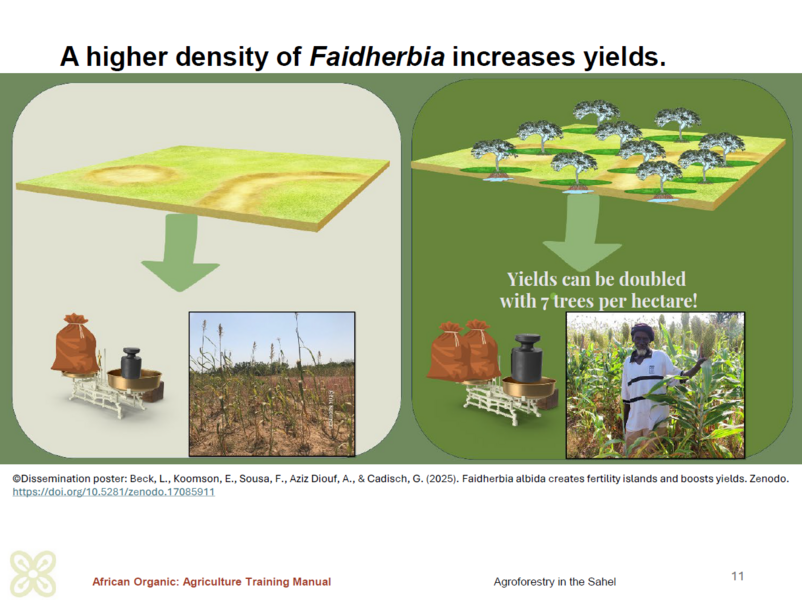
According to a simulation, combining Faidherbia with cereals such as millet and sorghum improved yields at all sites studied, except in Saria, where rainfall is higher. It was the drier regions that benefited most from the presence of trees. A simulation showed that yields increase with the number of associated trees (Koomson et al. 2025).
This is because Faidherbia can even help crops to better withstand periods of drought. Indeed, it has been confirmed that during the dry season, its root system causes water to rise at night to the surface layers of the soil (Diongue et al. 2023; Fauconnier et al. 2024) .
This example shows the immense potential of adding organic matter, such as manure or plant residues, combined with the integration of trees and shrubs, particularly in the face of climate change.
If a variety of trees and shrubs are integrated into the field, the combination of these species brings even more complementary benefits (Roessler et al. 2025) .
Key recommendations:
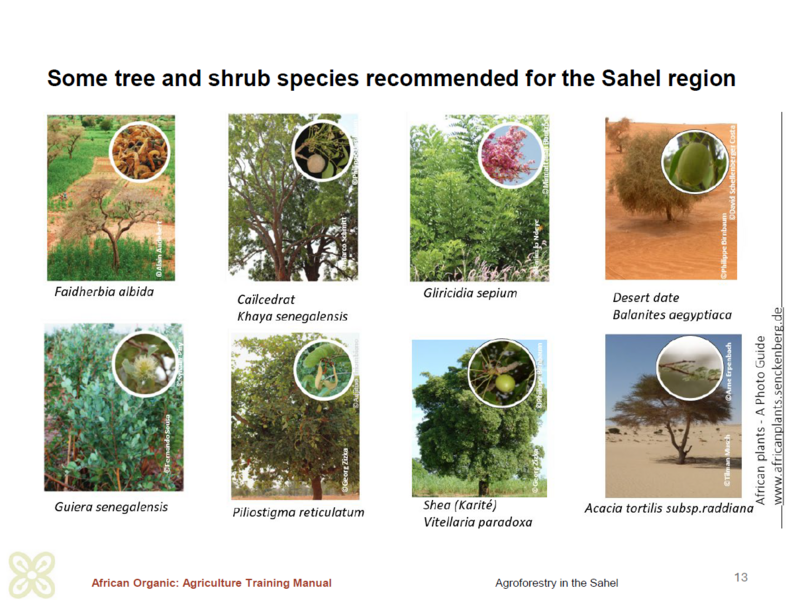
- Integrate, preserve, and increase trees and shrubs that are resilient to local conditions in crop fields (e.g., fields of millet, sorghum, cotton, and peanuts).
Objective: to promote beneficial soil organisms, soil structure, moisture conservation, shade, prevent erosion and storm damage, and develop organic matter and soil fertility. - Encourage the combined planting of fast-growing and slow-growing species when establishing tree or shrub seedlings.
Objective: promote early biomass production and sustainable ecosystem services (e.g., enriching the soil with organic matter). - Integrate local woody legume species such as Faidherbia. Objective: nitrogen fixation and soil enrichment.
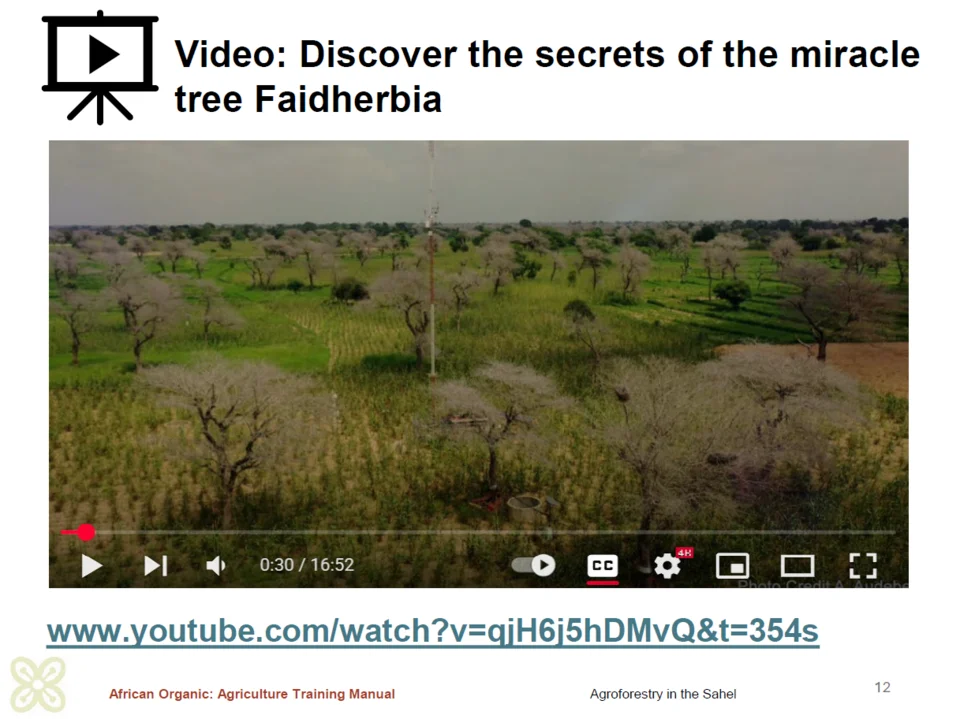
Watch the video and discuss with farmers, using the posters above, how Faidherbia can benefit their crops. https://www.youtube.com/watch?v=qjH6j5hDMvQ&t=352s
The following questions may be useful to guide the discussion:
- Have you made any observations near Faidherbia trees?
- Do these observations correspond to the observations presented?
- How could you benefit more from this tree? Can you increase their density?
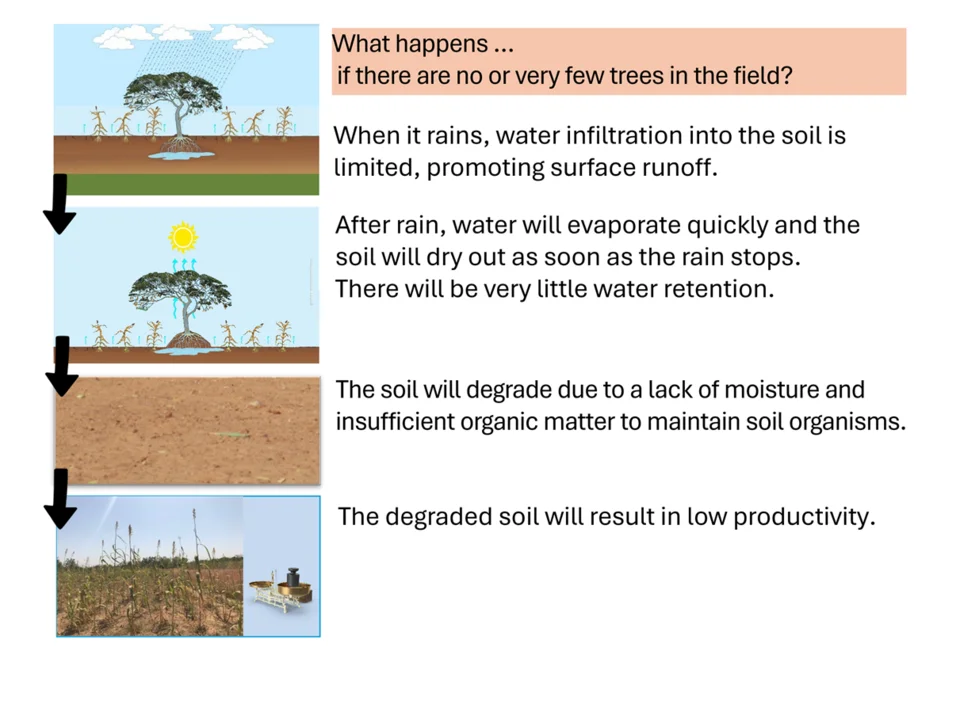
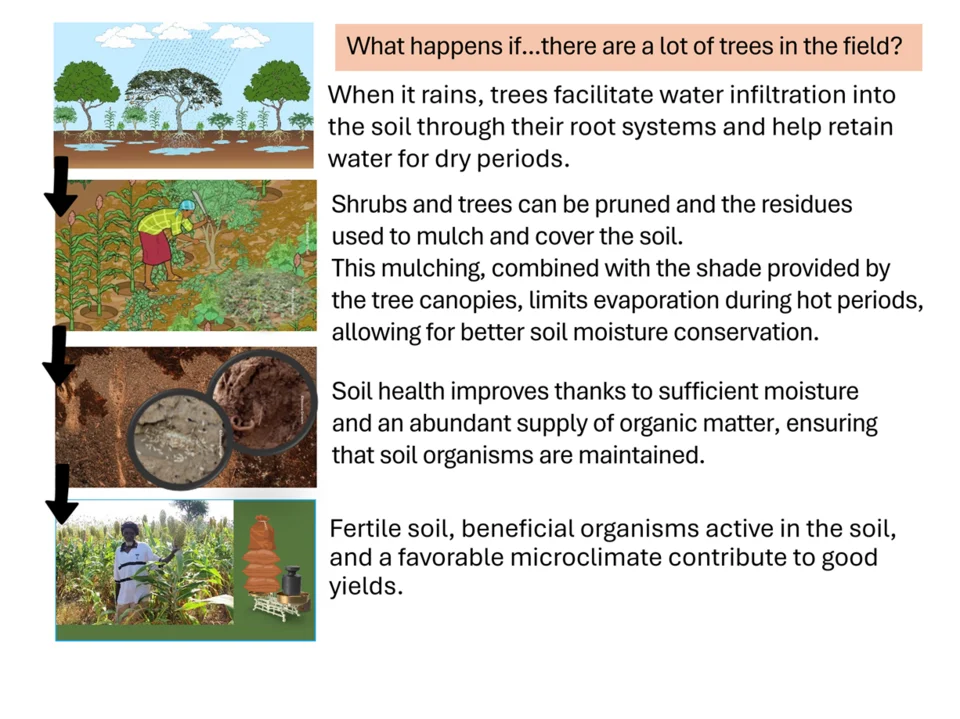
To discuss how Faidherbia albida trees create "islands of fertility" under their canopy, you can use this poster, which illustrates their beneficial ecological effects and increased yields.
https://zenodo.org/records/17132794
Talk to farmers about the tree species they would like to integrate into their fields and the benefits they know or have already observed (e.g., soil improvement, shade, fodder, erosion protection).
 tap and then scroll down to the Add to Home Screen command.