Agroforestry: Higher yields are possible thanks to ecology
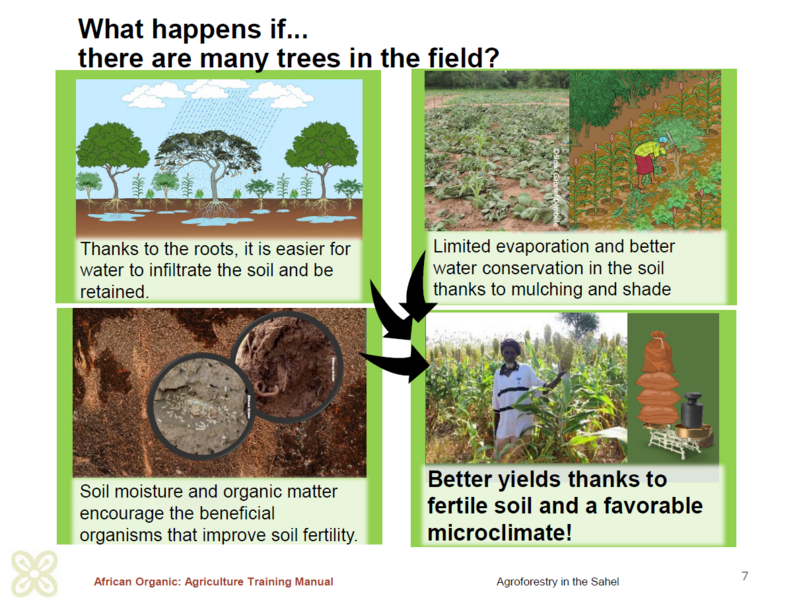
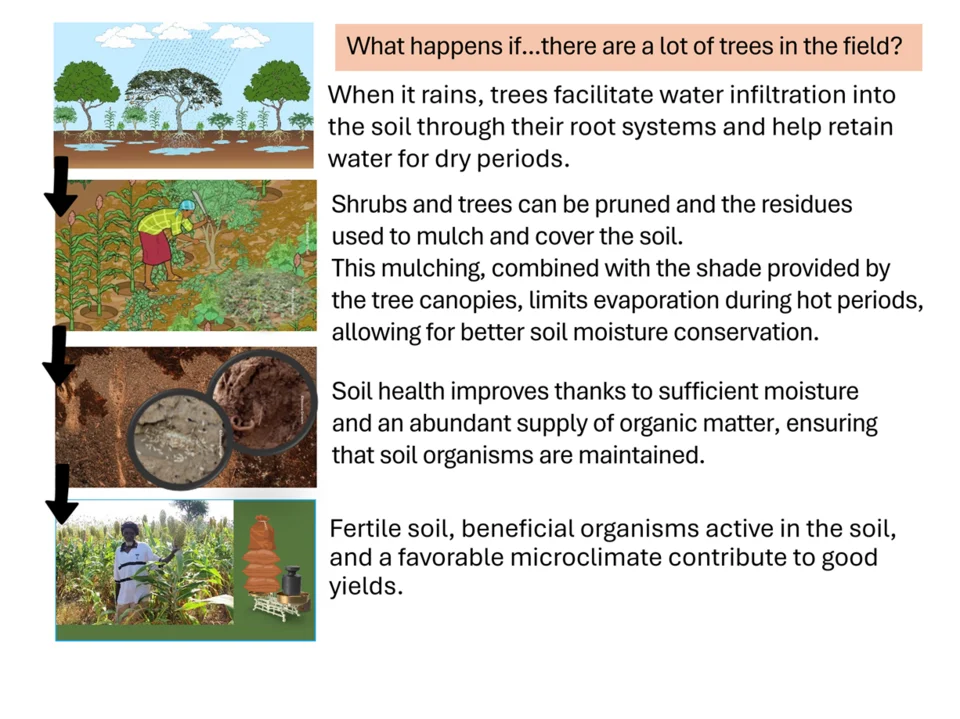
Trees and shrubs promote the infiltration of rainwater into the soil, thereby contributing to its retention and availability for crops. Some deep roots even draw water up to the upper layers of the soil, where it can be used by surrounding crops. What's more, a tree is never alone.
Beneath the leaves, a hidden world thrives: Roots, earthworms, and a rich diversity of soil organisms transform organic matter into life. Together, they create healthy, fertile soil.
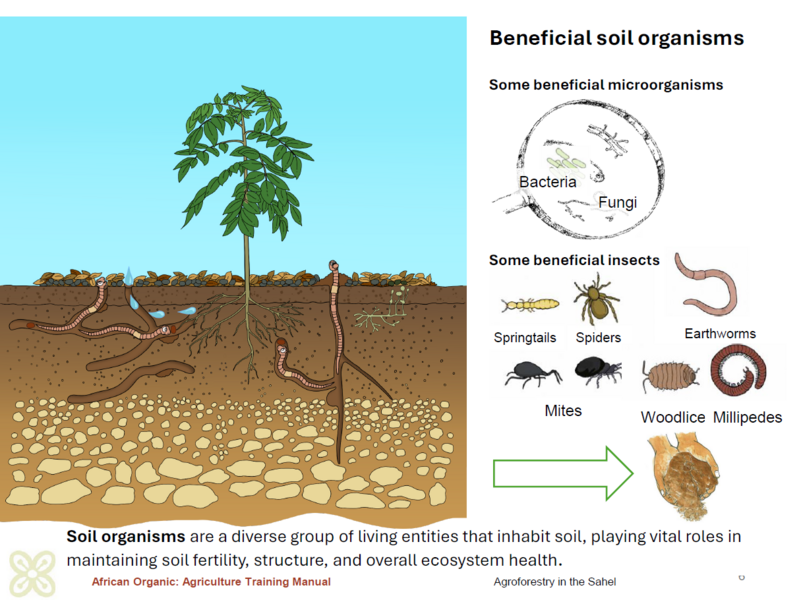
When leaves fall, they form a soft carpet that locks in moisture and shields the soil from heat. Beneath this natural blanket, unseen life is hard at work. Earthworms and soil organisms, like mycorrhizae, break down organic matter, including leaves, releasing nutrients that nourish plants. Mycorrhizae, a fungus connected to plant roots, acts as nutrient conduits, absorbing and distributing essential elements.
Earthworms also shape the soil's structure, creating tunnels that allow water to infiltrate. Meanwhile, the tree's deep roots tap into underground layers, drawing up vital nutrients to the surface.
This is how trees and soil organisms form a living, fertile, and generous ecosystem that increases crop productivity.
These beneficial effects become even more important when faced with the effects of climate change, such as drought. For example, the Faidherbia albida tree, as shown in one of the SustainSahel project studies, has demonstrated its ability to mitigate rainfall shortages in the Sahel region (Clermont-Dauphin et al. 2023) . In addition, trees and shrubs create a favorable microclimate for plants and livestock, particularly through their shade, which helps mitigate the effects of hot and dry periods.
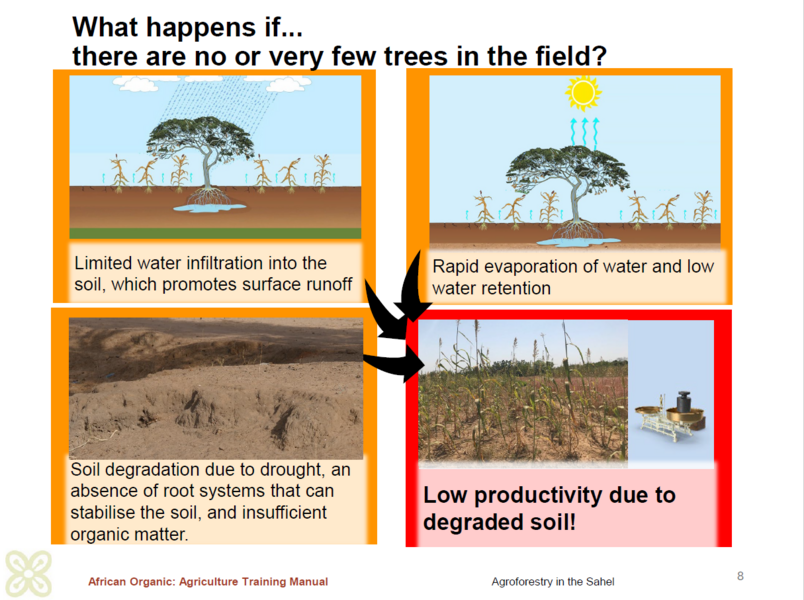
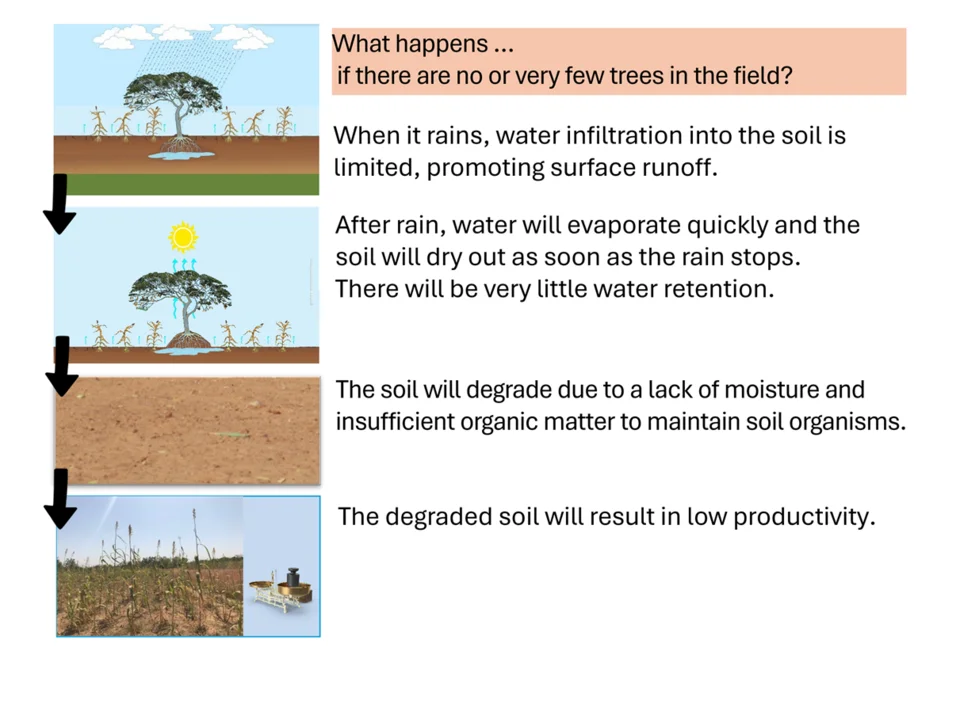
On the other hand, if there are very few trees and shrubs in a field, water infiltration during rainfall will be low and evaporation will be rapid. In addition, the absence of root systems to hold the soil in place allows the wind to blow the soil away, leading to erosion. As a result, the soil loses its richest top-soil layer and becomes depleted of organic matter and soil microorganisms. This combination of factors will lead to low agricultural yields and continued soil degradation.
Reflection on the benefits of trees in fields
Invite farmers to participate in a discussion on the benefits of trees in fields to share their experiences and observations. To facilitate the discussion, you can use the poster entitled "Beneficial effects of integrating trees into fields."
https://zenodo.org/records/15342117
The poster outlines some of the most important ecosystem services that can be achieved by integrating trees into fields, providing a basis for discussion with farmers.
Below is a description that can help you present the poster:
Discussion on appropriate crops
Ask the farmers, which crops they presently grow and discuss with them, which crops would be most suitable under organic management:
- Which crops contribute to a diverse family diet?
- Which crops respond to market demands?
- What price can you obtain on the market? Are there many competitors?
- Do the crops serve to feed livestock?
- Do the crops fertilize the soil, or do they offer shade for other crops or firewood?
- Which crops grow well together? Which crops contribute to a diverse and stable production system?
 tap and then scroll down to the Add to Home Screen command.