Shrubs as a source of organic matter
How can organic matter be generated?
In the Sahel region, it is sometimes difficult to find organic matter, such as plant residues or manure, because farmers often need it for other purposes.
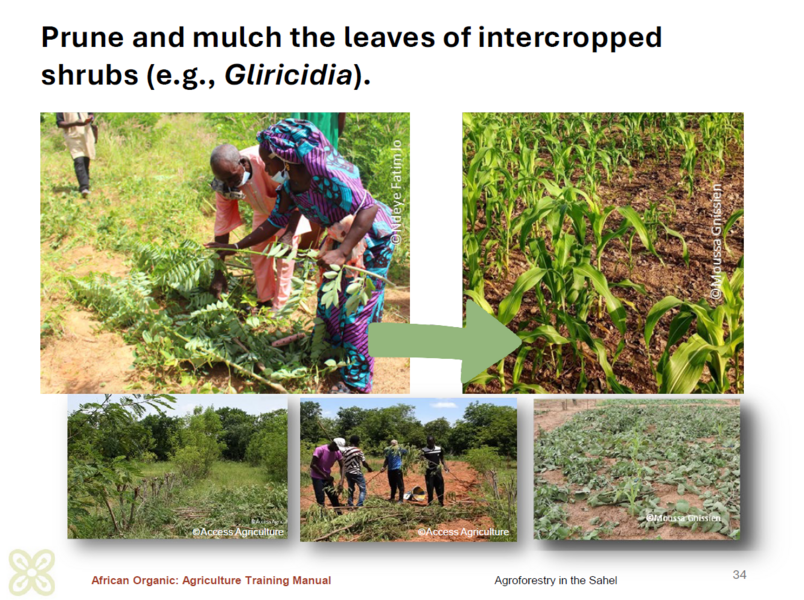
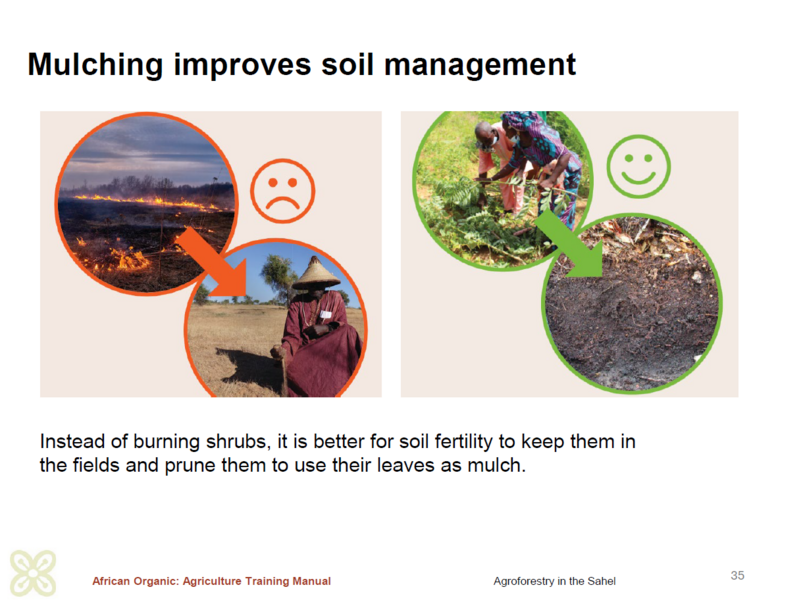
One solution is to increase the number of shrubs and trees in agricultural fields so that they can be pruned. The cut leaves and branches can then be used to cover the soil and decompose. This is called mulching, which will make the soil more fertile.
The benefits of mulching
Mulching has many beneficial effects and can help increase yields. Field trials in Mali have shown that adding biomass from pruning Guiera, Piliostigma, and Gliricidia (2 t/ha) increases sorghum yield compared to the control and improves soil fertility (Koné et al. 2025) .
As part of the SustainSahel project, research has been conducted into how mulching shrubs can improve soil health and yields. For example, Piliostigma reticulatum is a species of shrub that occurs naturally in the Sahel, particularly in Mali and Burkina Faso. It is drought-resistant and even provides fodder for animals.
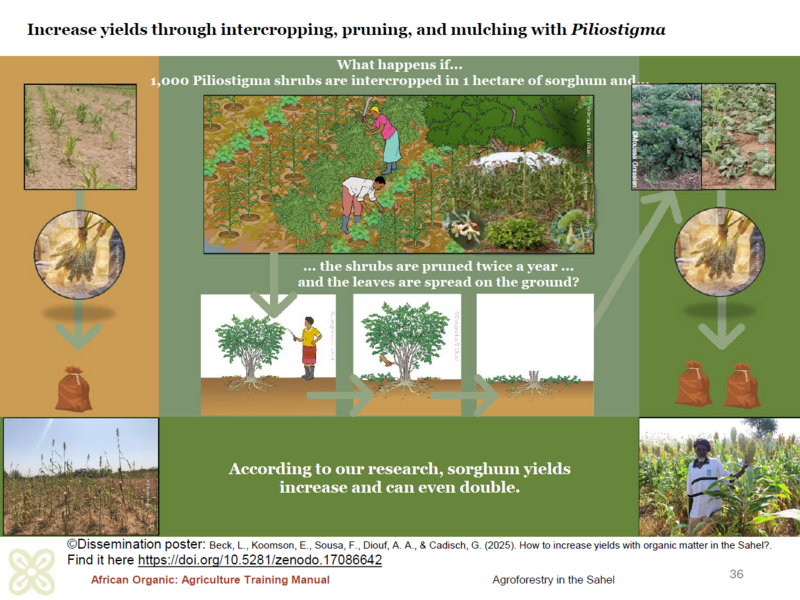
What would happen if we integrated the Piliostigma species and pruned it, leaving the leaves to decompose as mulch in the field?
Our researchers ran a simulation integrating 1,000 shrubs per hectare and pruning them twice a year, which showed that yields increase significantly. Sorghum grain yield can be doubled compared to the yield obtained without intercropping with mulching (Koomson et al. 2025).
Alley cropping with Gliricidia sepium can also increase yields of maize, cotton, and sorghum, sometimes doubling them (Doumbia et al. 2020b) .
If you don't have a lot of mulch, a good tip is to use it in crusted areas of the field. This promotes soil macrofauna.
But beyond enriching the soil with organic matter and supporting soil life, mulching offers many other beneficial effects:
Mulching with woody prunings inhibits the growth of weeds. It also promotes the presence of natural auxiliaries, such as pest predators, which reduces attacks on crops and supports farmers in pest management. But that's not all: it has also been observed that applying Piliostigma, Gliricidia, and Guiera prunings in combination reduces erosion (Koné et al. 2025) . Mulching forms a protective cover that limits water evaporation, thus maintaining soil moisture. Similarly, mulch reduces soil temperature, protecting beneficial soil organisms and crops. In addition, mulched soils (with shrub biomass) have improved soil structure and higher water infiltration rates. Finally, mulching can even reduce soil salinity.
Mixing different species for mulching accelerates its mineralization. It is worth noting that the use of nitrogen-rich species such as nitrogen-fixing trees and shrubs (e.g., Faidherbia albida and Pterocarpus spp.) accelerates the degradation of the mixture (Fané et al. 2023).
Key recommendations:
- Avoid burning plant residues and shrubs; instead, use mulch or lightly incorporate plant residues/woody biomass at the beginning of the rainy season.
- Objective: to improve soil fertility by adding organic matter, prevent erosion, and avoid harming soil organisms through burning.
- Apply pruning waste from local shrubs and trees such as Gliricidia, Piliostigma, Guiera, Leucaena, African carob (Parkia biglobosa), and shea (Vitellaria paradoxa) as mulch or surface compost before and after the rainy season.
- Objective: to protect the soil from erosion, enrich it with organic matter, and conserve its moisture.
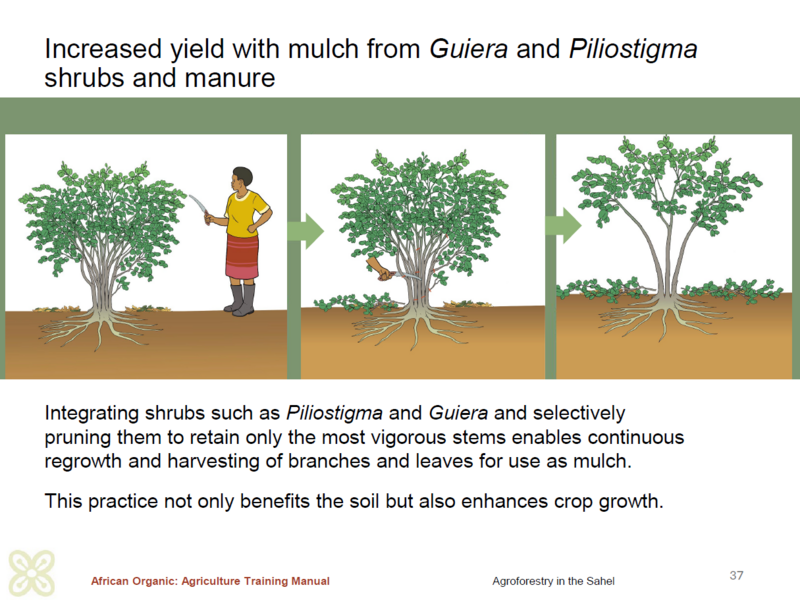
- Grow shrubs (legumes) (e.g., Gliricidia sepium, Guiera senegalensis, Piliostigma spp., Leucaena leucocephala) in hedges or alleys—prune them strategically to regulate shade and allow adjacent crops in the corridors to thrive by mulching the pruned plant residues (mulch cut and left in place).
- Objective: Allows for high shrub density per hectare and provides numerous benefits to crops due to the proximity and biomass production of the shrubs.
- Prune shrubs and trees according to their species and age:
For example, intensive pruning practices have harmful effects on Faidherbia albida. Piliostigma spp., on the other hand, can be pollarded. Gliricidia sepium should only be pruned during the second year after planting.- Objective: to avoid damaging shrubs and trees.
Use this poster, produced in collaboration with researchers and farmers, to facilitate discussions with farmers about the benefits of pruning and mulching local shrubs in the Sahel, in combination with sorghum cultivation, to increase agricultural yields.
 tap and then scroll down to the Add to Home Screen command.