How agroforestry benefits livestock and creates a sustainable nutrient cycle
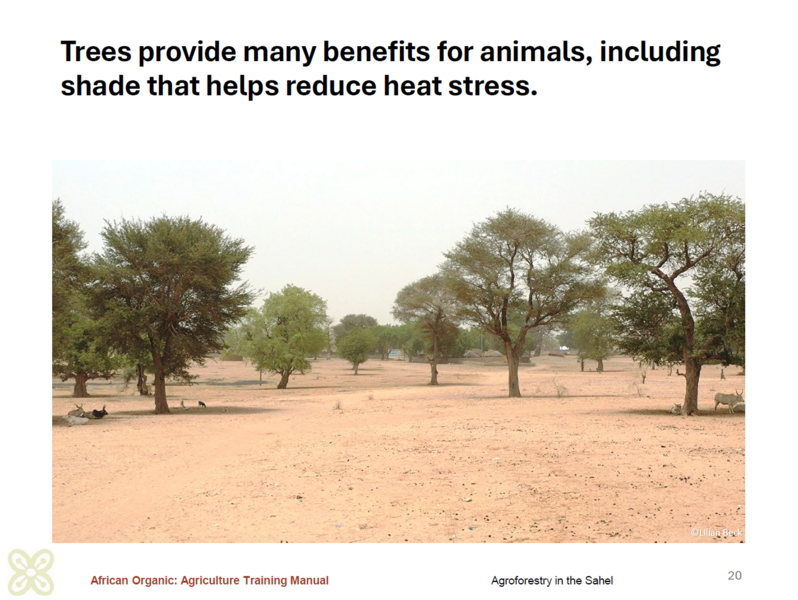
Agroforestry systems provide multiple benefits for livestock, including shade, improved nutrition, and climate resilience, while supporting biodiversity and other ecosystem services. Trees provide shade, thereby reducing heat stress for animals and improving their comfort and productivity. They also help with water retention in the soil.
At the same time, livestock is a vital part of the agroforestry system: A healthy herd produces nutrient-rich manure (Fané, 2025) that fertilizes fields and increases crop yields, thus completing the virtuous circle.
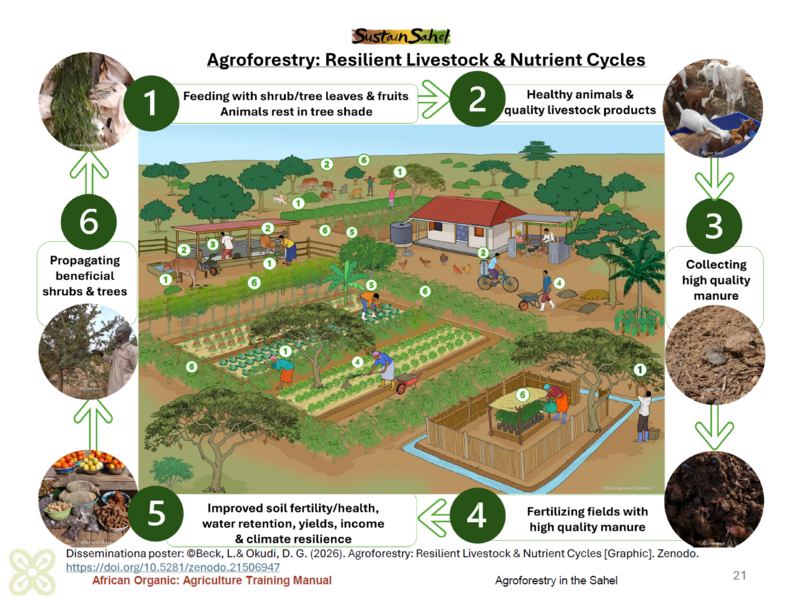
This creates a sustainable cycle of benefits:
Feeding animals with shrub and tree leaves and fruits leads to healthier animals and high-quality livestock products, which in turn produce nutrient-rich manure. This manure enhances soil fertility and crop yields, encouraging farmers to plant and propagate more trees and shrubs. As a result, the availability of high-quality forage increases, further supporting livestock health and productivity.
Treatment Protocol:
- Isolation: Infected animals should be separated from the herd to prevent further spread of the infection.
- Medicinal Leaf Feeding: Feed the infected animals one-third of their daily feed ration with leaves from medicinal shrubs and trees for two weeks.
- Monitoring and Recovery: After two weeks, the infection is typically reduced, and the animals can be reintroduced to the herd.
This approach leverages the natural anthelmintic properties of local plants, providing a sustainable and effective method to manage GIN infections in Sahelian ruminants.
Incorporating 40% or more fresh leaves from Baobab (Adansonia digitata), Jujube (Ziziphus mauritiana), Caïlcédrat (Khaya senegalensis) or desert date (Balanites aegyptiaca) into the daily rations of infected sheep and goats for 14 days can significantly reduce intestinal nematode infestation during the rainy season (Beye et al., 2023 and forthcoming).
For further information please look at our dissemination poster:
Beck, L., Beye, A., & Sousa, F. (2025). Application of medicinal trees and shrubs to treat gastrointestinal nematode infestations (Version 1). Zenodo. https://doi.org/10.5281/zenodo.15342067
Moreover, please watch our video on how to manage GIN with medicinal tree and shrub leaves. https://www.accessagriculture.org/managing-intestinal-nematodes-small-ruminants
 tap and then scroll down to the Add to Home Screen command.