Animal health (treatment against parasites)
But that's not all: shrubs and trees also have medicinal uses. Let us show you one example:
Gastrointestinal Nematodes in Sahelian Ruminants and Treatment Options with Sahelian medicinal shrubs & trees
Gastrointestinal nematodes (GIN) are a major health concern for ruminants such as goats and sheep in the Sahel. These parasites cause severe health problems and can even lead to death. While chemical medicines have traditionally been used to control GIN, their effectiveness is declining due to the development of resistance.
Fortunately, some medicinal shrubs and trees native to the Sahel have been found to effectively reduce GIN infections. These plants offer a natural and sustainable alternative to chemical treatments. This approach is based on both the traditional knowledge of Sahelian farmers in using medicinal trees to treat animals and recent scientific studies confirming its effectiveness.
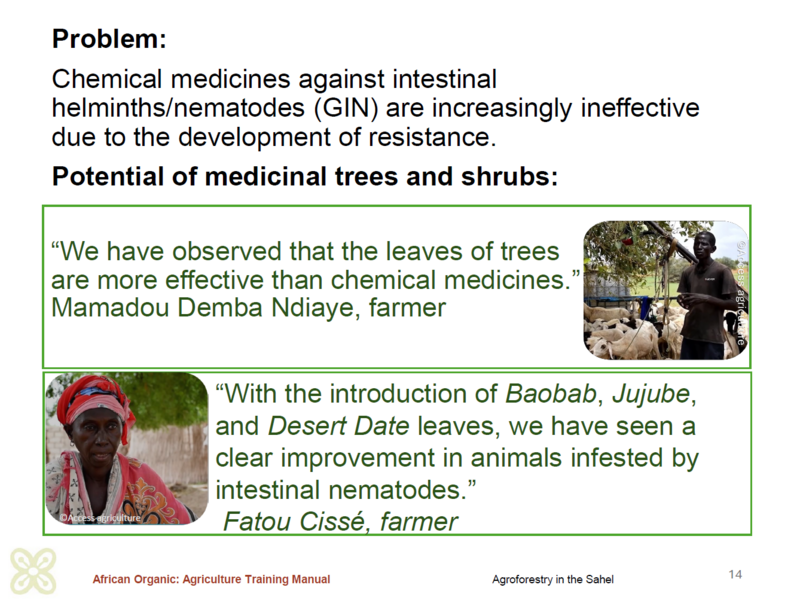
Infection, Symptoms, and Diagnosis:
GIN infect ruminants through the ingestion of contaminated forage or water. Common symptoms of affected animals include weight loss, diarrhea, anemia, and general weakness. Diagnosis can be efficiently performed using the Famacha card, a tool that assesses the degree of anemia in the animal's eyelids, indicating the severity of infection especially with the parasite Haemonchus contortus, which does not necessarily provoke diarrhea.
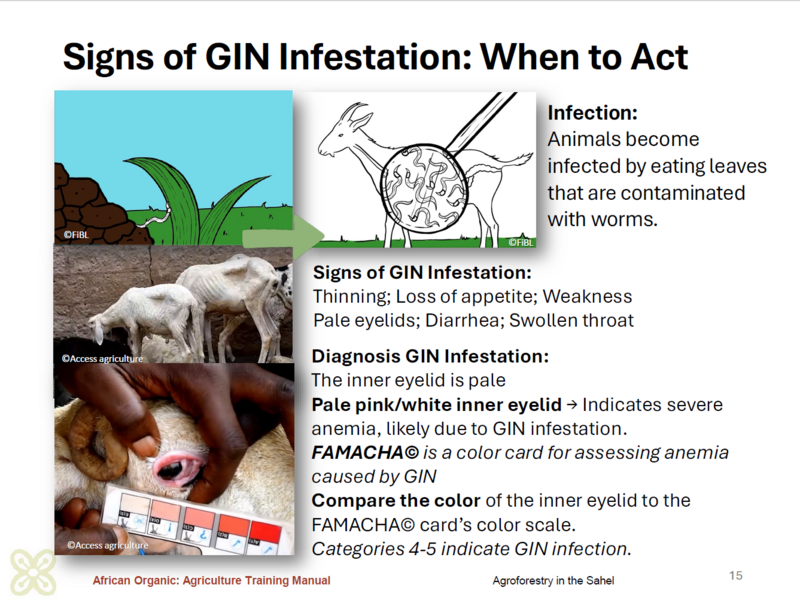
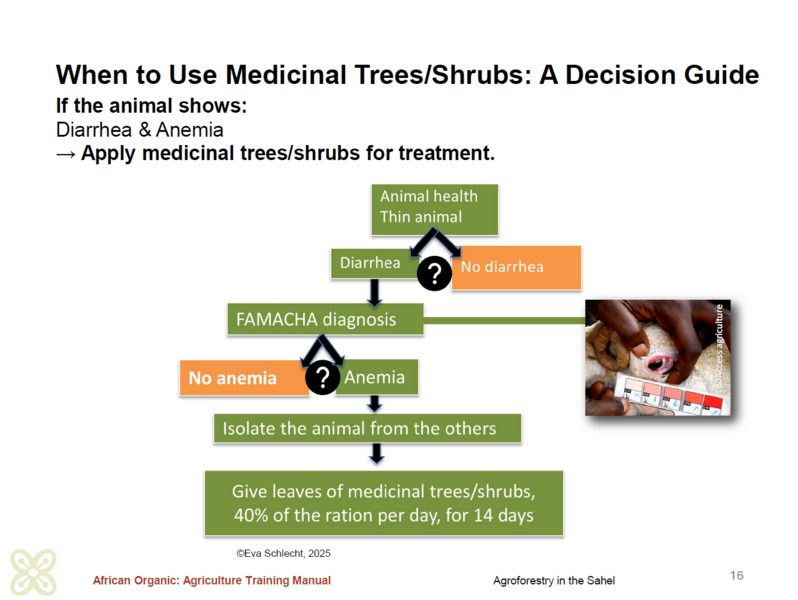
Treatment Protocol:
- Isolation: Infected animals should be separated from the herd to prevent further spread of the infection.
- Medicinal Leaf Feeding: Feed the infected animals one-third of their daily feed ration with leaves from medicinal shrubs and trees for two weeks.
- Monitoring and Recovery: After two weeks, the infection is typically reduced, and the animals can be reintroduced to the herd.
This approach leverages the natural anthelmintic properties of local plants, providing a sustainable and effective method to manage GIN infections in Sahelian ruminants.
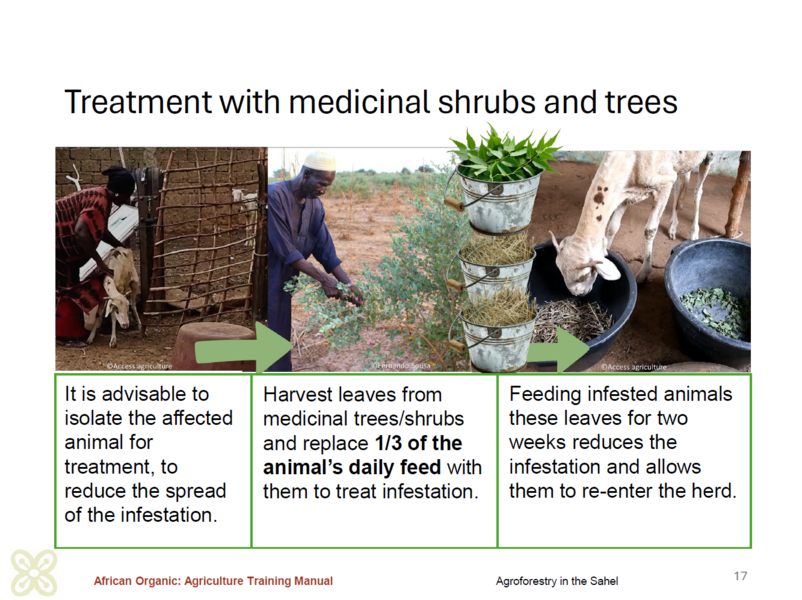
Incorporating 40% or more fresh leaves from Baobab (Adansonia digitata), Jujube (Ziziphus mauritiana), Caïlcédrat (Khaya senegalensis) or desert date (Balanites aegyptiaca) into the daily rations of infected sheep and goats for 14 days can significantly reduce intestinal nematode infestation during the rainy season (Beye et al., 2023 and forthcoming).
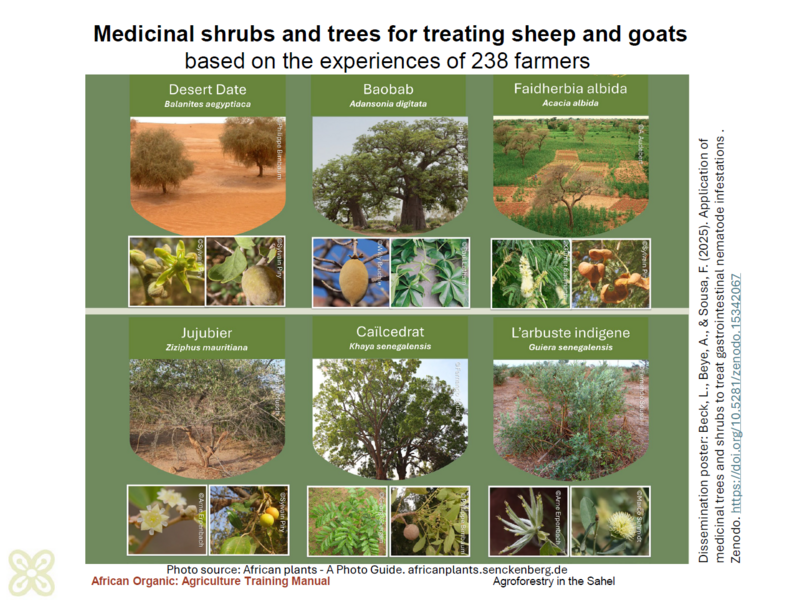
For further information please look at our dissemination poster:
Beck, L., Beye, A., & Sousa, F. (2025). Application of medicinal trees and shrubs to treat gastrointestinal nematode infestations (Version 1). Zenodo. https://doi.org/10.5281/zenodo.15342067
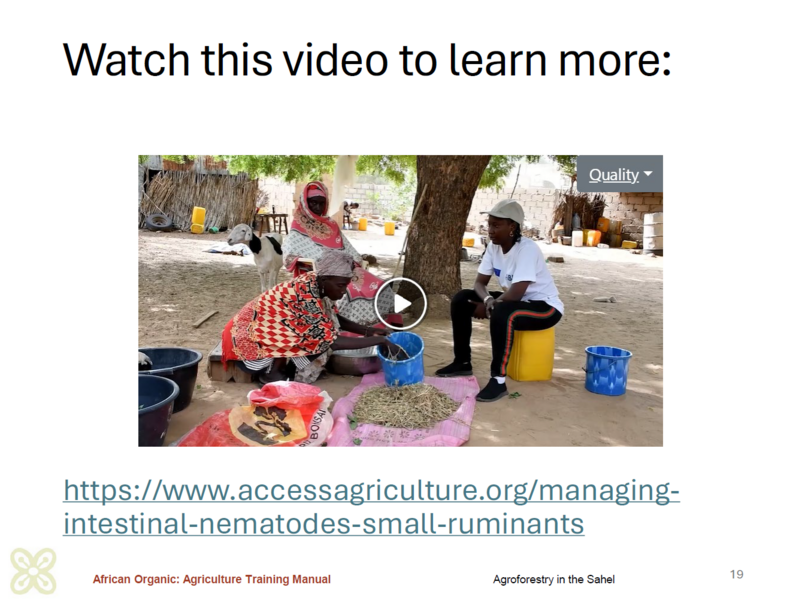
Moreover, please watch our video on how to manage GIN with medicinal tree and shrub leaves. https://www.accessagriculture.org/managing-intestinal-nematodes-small-ruminants
 tap and then scroll down to the Add to Home Screen command.