Forage
Improved forage availability
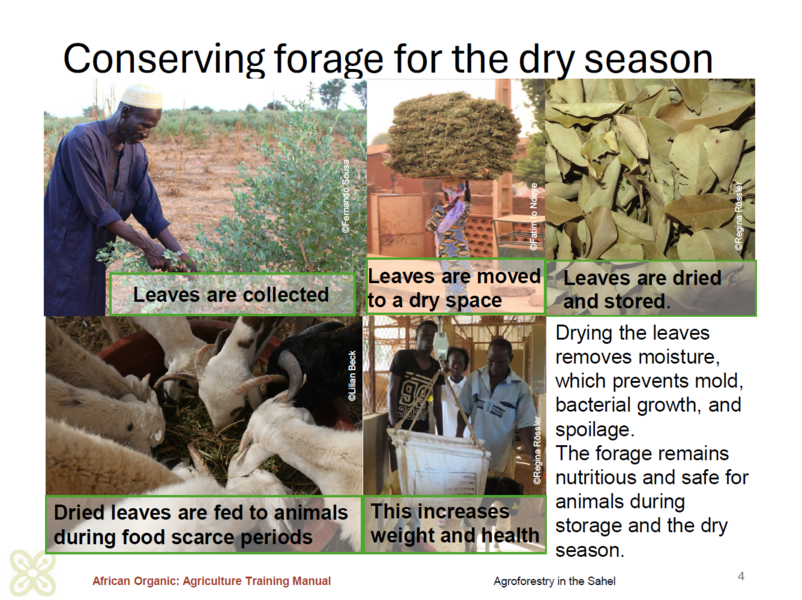
Trees and shrubs can even be used to improve animal nutrition. Shrub and tree species such as sycamore fig (Ficus sycomorus), red kapok (Bombax costatum), Pterocarpus lucens, Caïlcedrat (Khaya senegalensis), and Entada africana are particularly valuable as feed for small ruminants, especially during the dry season (Coulibaly et al., 2025; Traoré et al., 2025). This means that if the leaves are harvested during the season when the trees have fresh foliage and are then dried, they can be used during the dry season when few other sources of foliage are available.
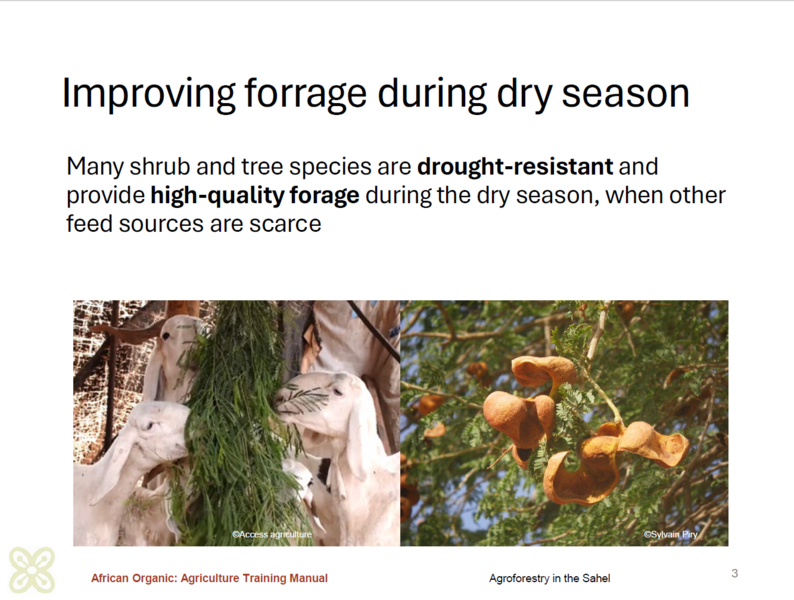
However, some shrubs provide fresh leaves and fodder even during the dry season, such as Faidherbia albida (pods and leaves), or Guiera senegalensis (leaves). These species can then be used to feed animals.
Steps for Conserving Nutritious Leaves as Forage:
- Collecting: Harvest fresh leaves from nutritious shrubs and trees during the season when they are most abundant. Thereby, harvest not more than 30% of the leaves/branches from an individual plant and do not coppice the whole tree or shrub, else it will die.
- Drying: Spread the leaves in a clean, dry space to remove moisture and prevent mold, bacterial growth, and spoilage.
- Storage: Store the dried leaves in a dry, sheltered space to maintain their nutritional value. If you put them in bags, just fill those bags loosely, and only when the leaves are totally dry.
- Use: The conserved forage remains highly nutritious and preserved, ensuring a reliable source of feed for animals during the dry season.
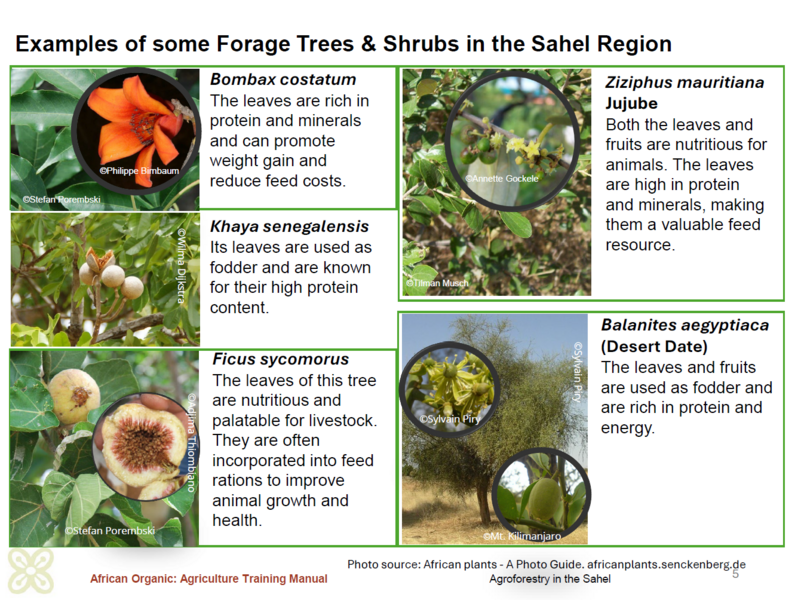
It is important to highlight the great diversity of shrubs and trees used for fodder in the Sahel (Roessler et al., 2024).
Calculation of forage mix
As a farmer or livestock keeper, you know that each animal species, whether goat, sheep, or cow, has unique nutritional needs. These needs depend not only on the animal's species and physiological stage but also on its body weight and milk production. Ensuring the right balance of energy, protein, and other nutrients is essential to prevent deficiencies, support health, fertility, and milk or meat production.
Leaves and branches from local trees and shrubs are a valuable, cost-effective, and sustainable supplement to traditional roughage and concentrate feed. They provide additional nutrients, including crude protein, minerals, and sometimes also medicinal benefits.
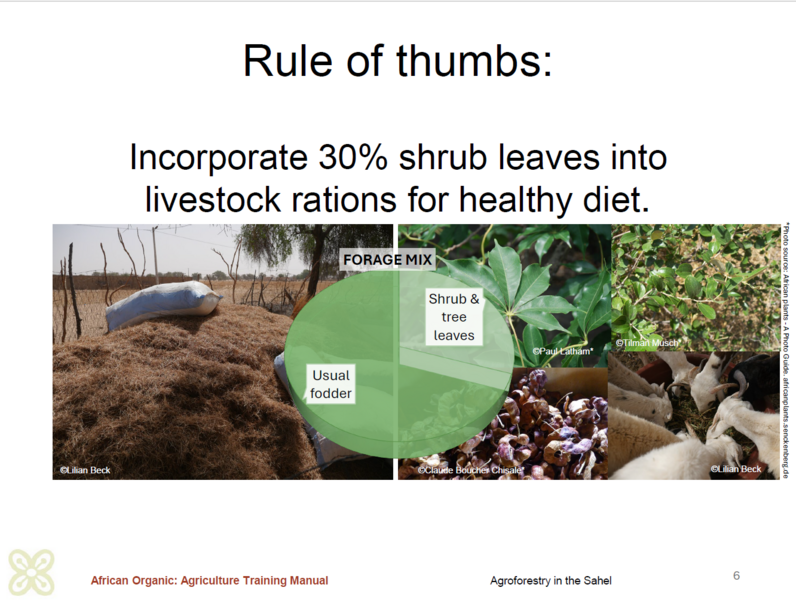
A practical rule of thumb: Incorporate 30% dried shrub leaves into livestock rations. This proportion balances the nutritional advantages of shrub leaves with the need for a diverse and digestible diet, ensuring optimal animal health and productivity.
However, the key lies in the right mix:
- Animal species, life stage, and body weight:
A lactating goat, for example, requires more protein and energy than a mature sheep at rest, and a heavier cow will need more feed than a lighter one. Body weight directly influences the animal's metabolic needs, making it a critical factor in feed ration calculations. - Movement and environment:
Animals that move longer distances or graze on sparse pastures have higher energy requirements. Certain leaves and branches can be used to meet these needs. - Availability and nutritional content:
Not every tree or shrub species contains the same nutrients. Some are rich in protein, while others provide more energy or minerals. The selection should be deliberate to optimally complement the feed ration. - Nutrient-rich + palatable + high in protein/minerals = Ideal feed. For example, Bombax costatum is both palatable and nutrient-rich, while Leucaena leucocephala is rich in protein and minerals. Combining such feeds ensures that animals get a complete, balanced diet that they will actually eat.
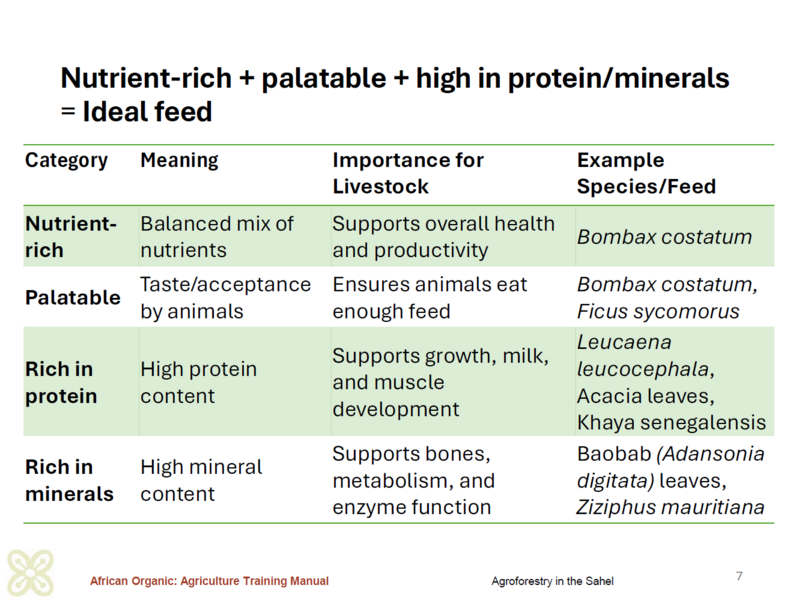
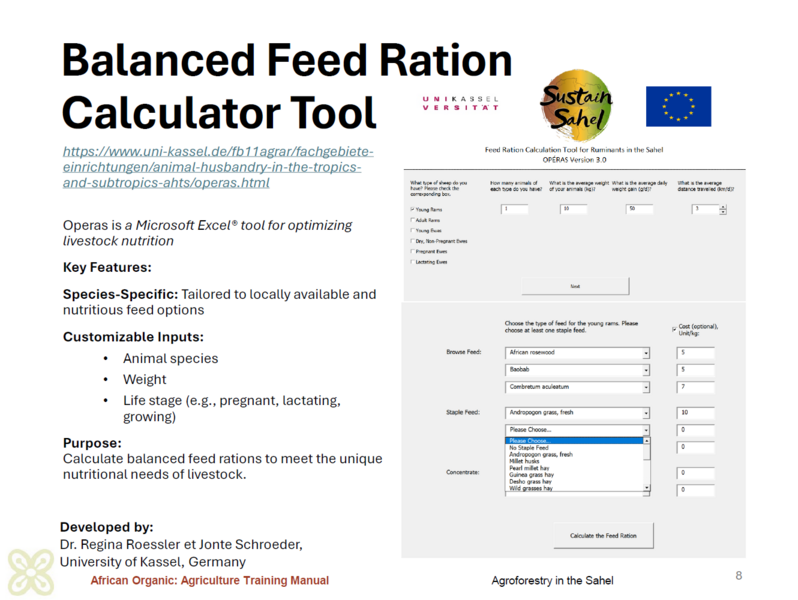
To make this calculation more precise and practical, the OPERAS tool was developed. It is an Excel-based optimization tool specifically designed to formulate balanced feed rations for small and large ruminants. OPERAS leverages locally available feed resources, especially leaves and pods from trees and shrubs, and integrates their nutritional profiles directly into the calculations. It also accounts for body weight, growth, pregnancy, lactation, and locomotion, ensuring that the ration meets the animal's exact needs.
Access the OPÉRAS tool and manuals here: www.uni-kassel.de/fb11agrar/fachgebiete-einrichtungen/animal-husbandry-in-the-tropics-and-subtropics-ahts/operas.html
Feeding pregnant and lactating livestock
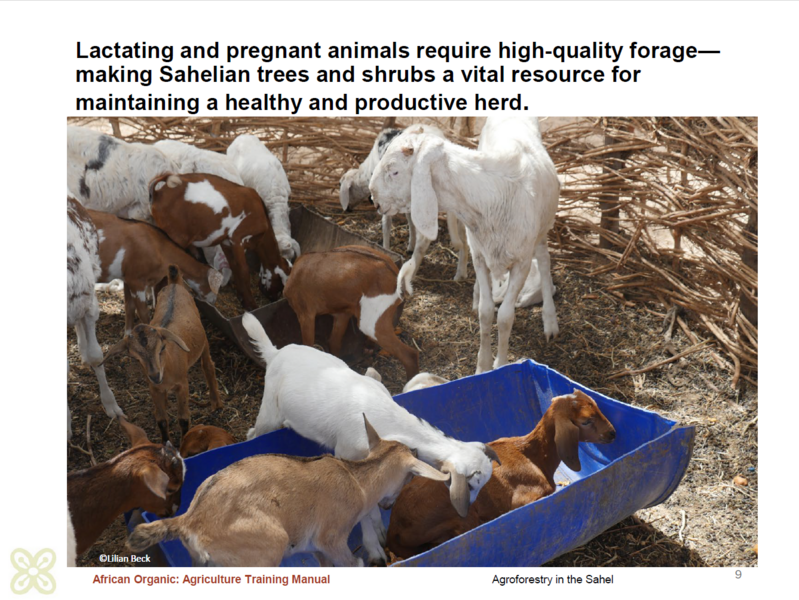
One of the most overlooked yet vital aspects of livestock management is the nutrition of pregnant and lactating females (ewes, does, cows), especially during the end of the dry season. This period is critical because:
- Undernourishment of females — particularly in the last two (ewes, does) or three (cows) months of gestation or during lactation — can lead to weak offspring, higher offspring mortality rates, and reduced flock productivity in general.
- Farmers often prioritize the feeding of fattening rams for immediate income, unintentionally neglecting the long-term reproductive health of the female breeding flock.
- Optimal feeding of females is not just about survival, it directly impacts the future of the flock. Well-nourished females produce stronger lambs, kids and calves, which grow into the next generation of productive females or valuable market animals.
Why does this matter?
A female that is poorly fed during pregnancy may give birth to underweight lambs/kids/calf, which are more vulnerable to disease and slower in gaining weight. During lactation, insufficient nutrition can reduce milk production, directly affecting the small ones' growth and survival. This cycle can weaken the entire flock over time.
Mothers who are well nourished, even during the dry season, give birth to healthier offspring.
Feeding pregnant and lactating animals requires careful attention to nutrition, as their needs change and they rely heavily on available forage.
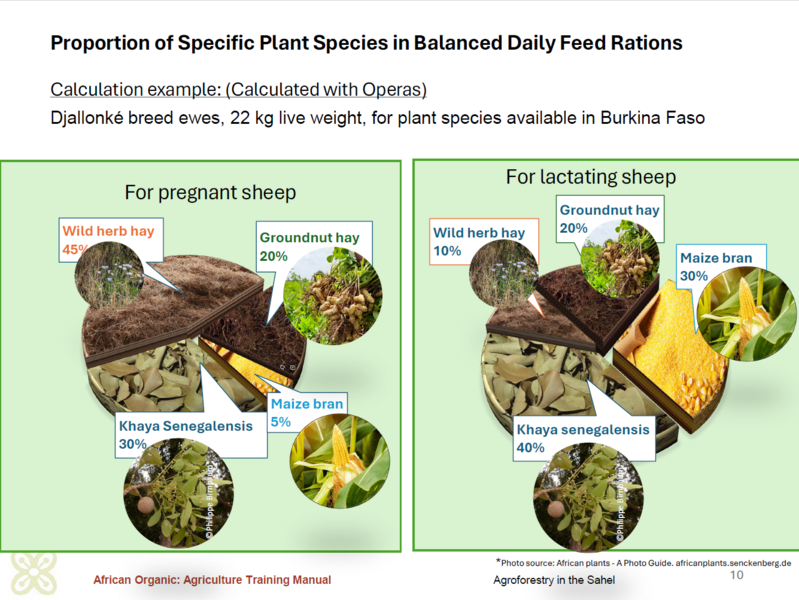
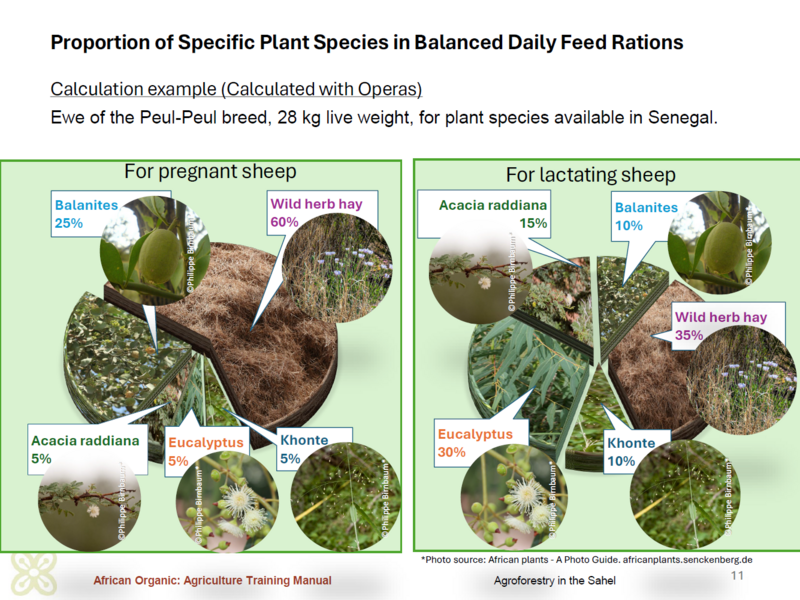
The composition of a given animal's daily meals varies depending on its own physiology and health, the environmental situation (for example, a hot or a rainy day) and the locally available plant species. This means that different plant species are mixed together in the diet, and therefore the proportions of each species matter.
Using the OPÉRAS calculation tool, we developed three adapted feed composition examples tailored to the locally available shrub and tree species in Mali, Burkina Faso, and Senegal.
The results show that forage composition, using a mix of leaves from different plant species, varies significantly depending on regional biodiversity and the nutritional needs of the target animals. As OPÉRAS can account for a substantial share of this very diverse and variable setting, it enables advisors and farmers to optimize feed mixes to ensure the health and productivity of their herds, with daily meal proportions clearly presented in the analysis.

 tap and then scroll down to the Add to Home Screen command.